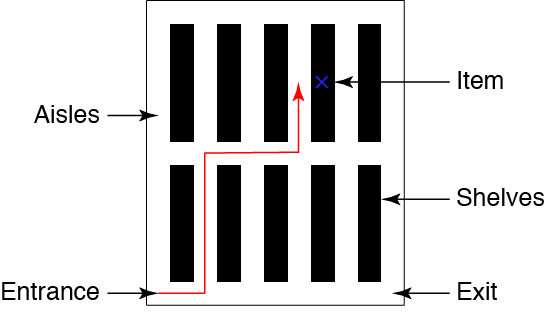
If you’re anything like me, the excruciating boredom of a trip to the supermarket is enough to get you thinking about anything else, in a desperate attempt to avoid a conversation on the best value lettuce on offer. I’ll do you a favour then by presenting some brain-fodder suitable for the next grocery hell-ride.
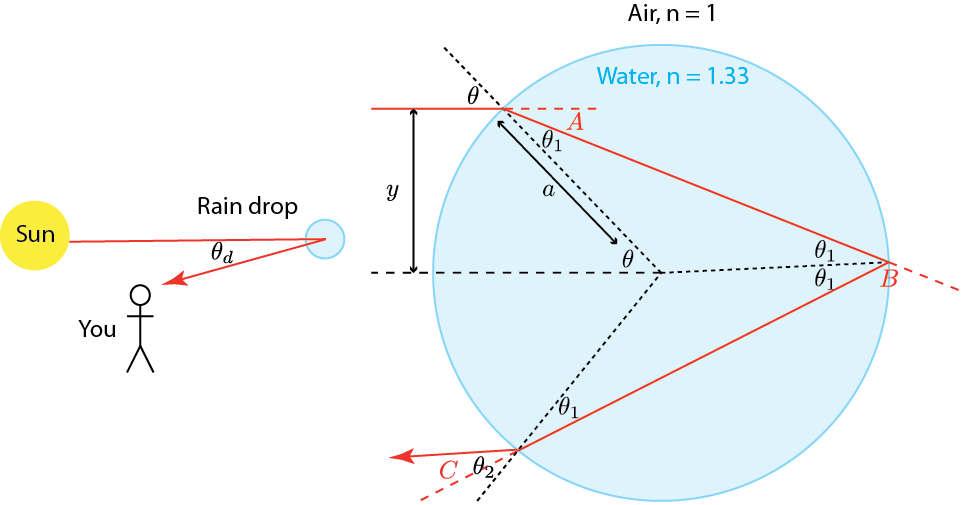
What’s in a rainbow? Fairytales and pixie dust? Gold and leprechauns? A boatload of drugs? Nope, just clear cold geometry and physics, just how we like it.
I’ve spend an unreasonably significant fraction of my life sitting in traffic, particularly along the infamous M4 corridor in England. Now, living in London I’m well acquainted with the various ways traffic jams can form. The ones which result from stuffing too many cars into too tiny streets have an obvious cause. Somewhat more irritating are those forming for seemingly no reason out on the motorway – queueing for ages at a standstill only to suddenly drive away like nothing happened. I’ve spent enough time in this unenviable state that it’s almost (though inevitably not quite) worth dedicating some brain time to thinking about why.
During one of my many spells stumbling around on the internet, I came across a very cool paper on modelling the trajectories of particles around black holes (bear with me…). It has all the required ingredients for this blog: maths, physics, nice pictures, and the chance to throw in a Muse reference. Let’s have a look.
The Android app below will no longer receive updates, but you can access an improved online version at https://wifi-solver.com
Original post (2014)
What a fancy icon! You should probably click it.
The recent attention this humble blog received was surprising to say the least. Despite continuing to be slightly bemused by it all, let it not be said I don’t listen to the comments I receive.There is therefore an Android app here:
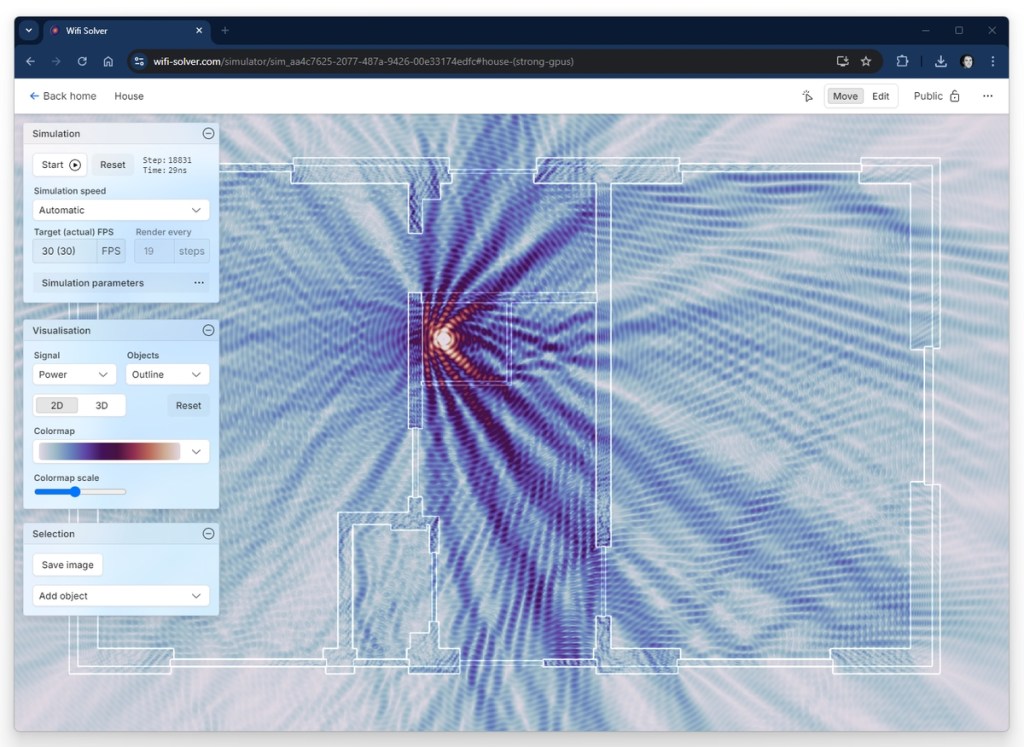
which is a version of the 2D FDTD simulation, and will run happily on a modern phone. My Nexus 4 manages about 1 step per second for an array size 350×600, and more up-to-date phones will surely be much quicker. There is a review here in Spanish.




 Almost looks like work